Mobile sales app for a movie theater
UX Design
This is the first project was created as part of the Google UX Design Professional Certification Program. The program includes the fundamentals of UX design, conduct user research, and design prototypes. I completed this project over the course of 4 months and learned an incredible amount about UX design.
Overview
During my research, I found that a lot of people don’t have a pleasant experience with movie theater and that’s why they don’t visit movie theaters often. They mostly have problems with crowds, strong sound effects, they don't know the space, which is why they are not sure that they will like it.
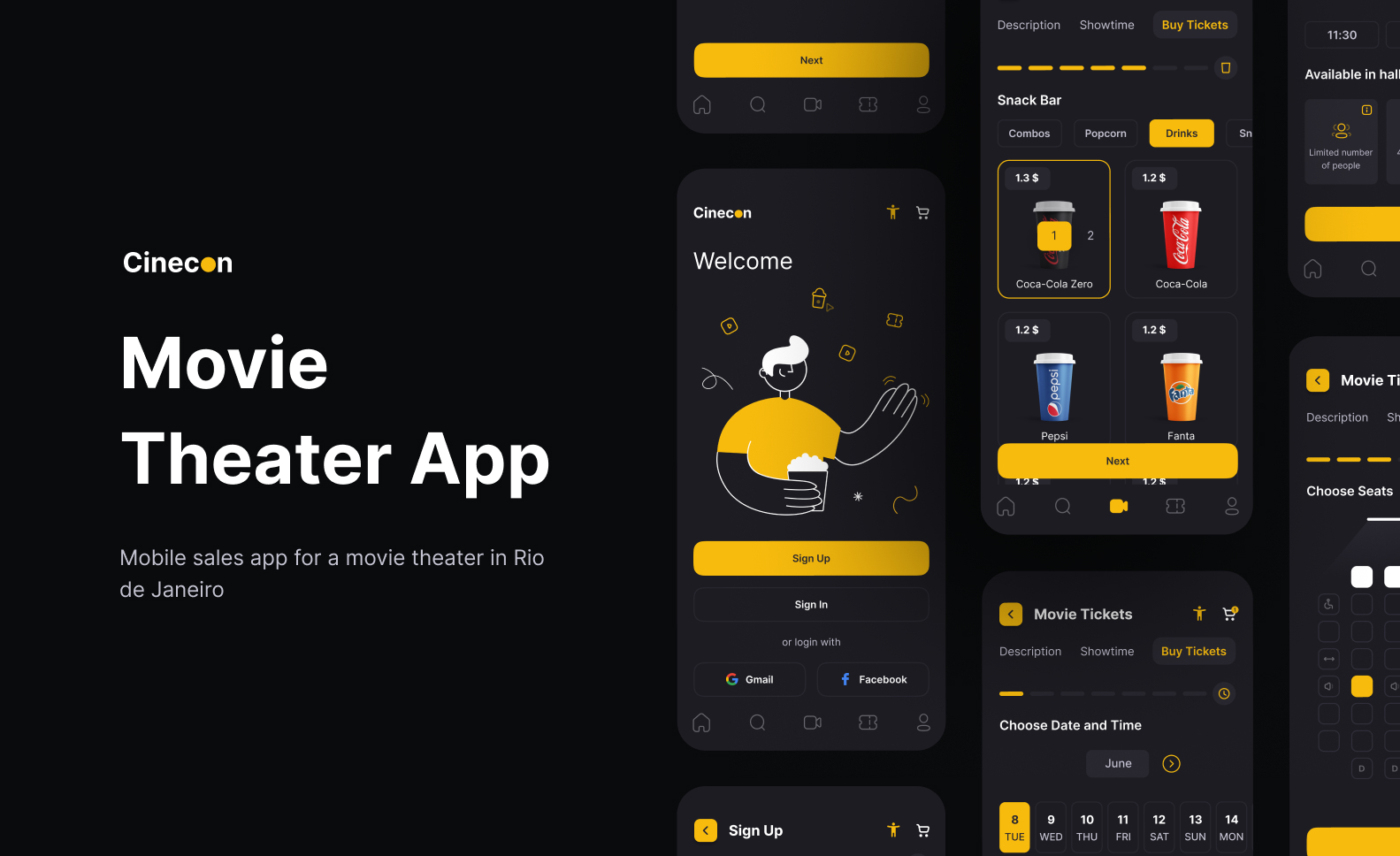
With that in mind, I designed the Cinecon mobile sales app for a movie theater in Rio de Janeiro. Cinecon offers the possibility of choosing a hall and seats that suit the visitor (e.g. a hall with a limited number of people and moderate sound effects), then a special pass that completely avoids crowds, getting to know the cinema space through a virtual tour, etc. Cinecon offers a wide range of competitive prices. The target group is people who like to feel comfortable in the movie theater, people who have not been to the movie theater often, and those who want to avoid the crowds.
My role: UX designer designing a mobile sales app for a movie theater from conception to delivery.
The goal: Design an app that allows users to choose the hall and seats according to their needs, allows them to avoid crowds, and provides a virtual tour through the movie theater.
Understanding the user
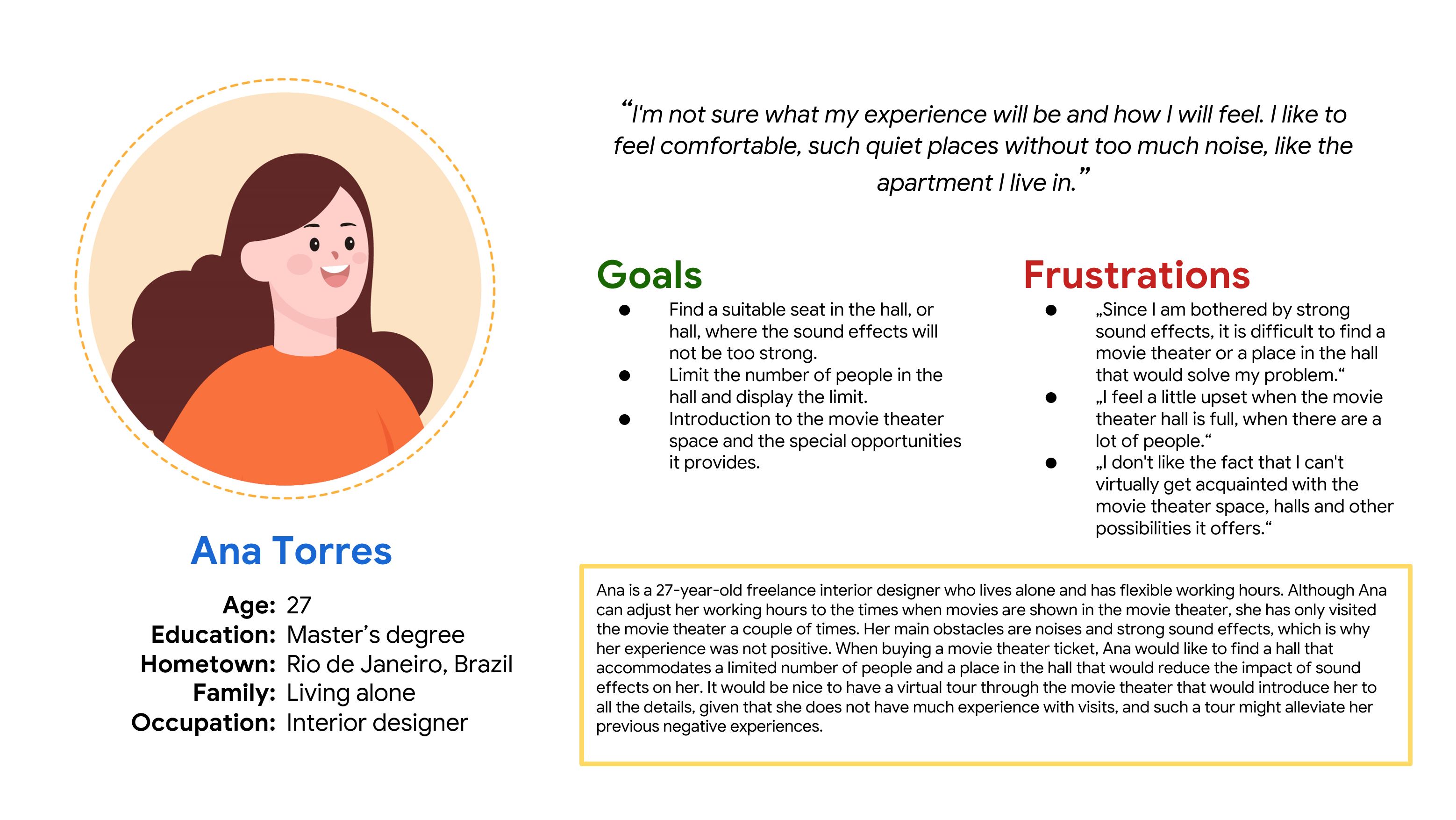
Empathize and understanding the users, define the problem statements, hypothesis statements, and value propositions is one of the major things. For this project the target audience is high school students, young adults, and adults who have visited an movie theater at least once and do not have to be frequent visitors.
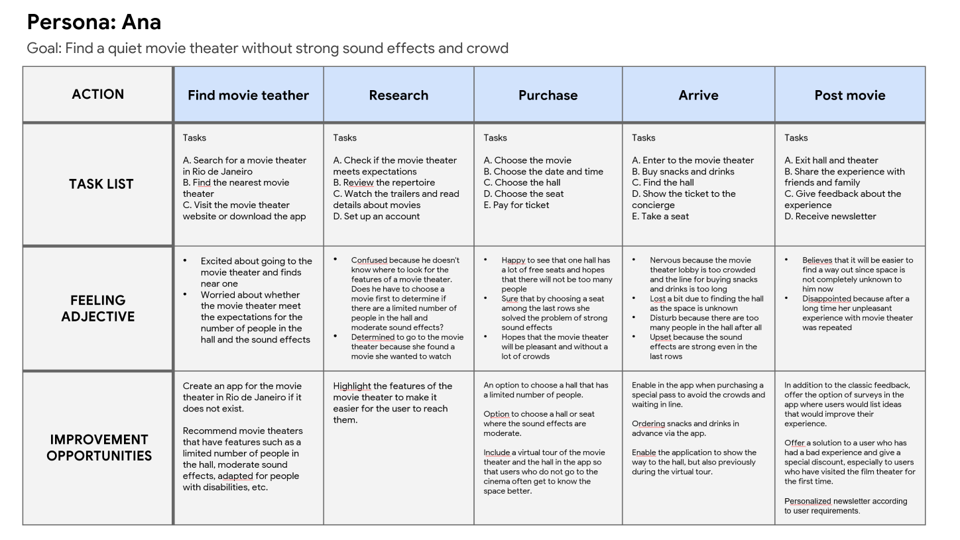
The key challenge is to determine what their experience is in a movie theater and what their needs are. After that, designing the app in accordance with user needs to improve their experience.
Persona
User journey map
Initial design concept
Based on the empathize and define phase I start with ideation phase.
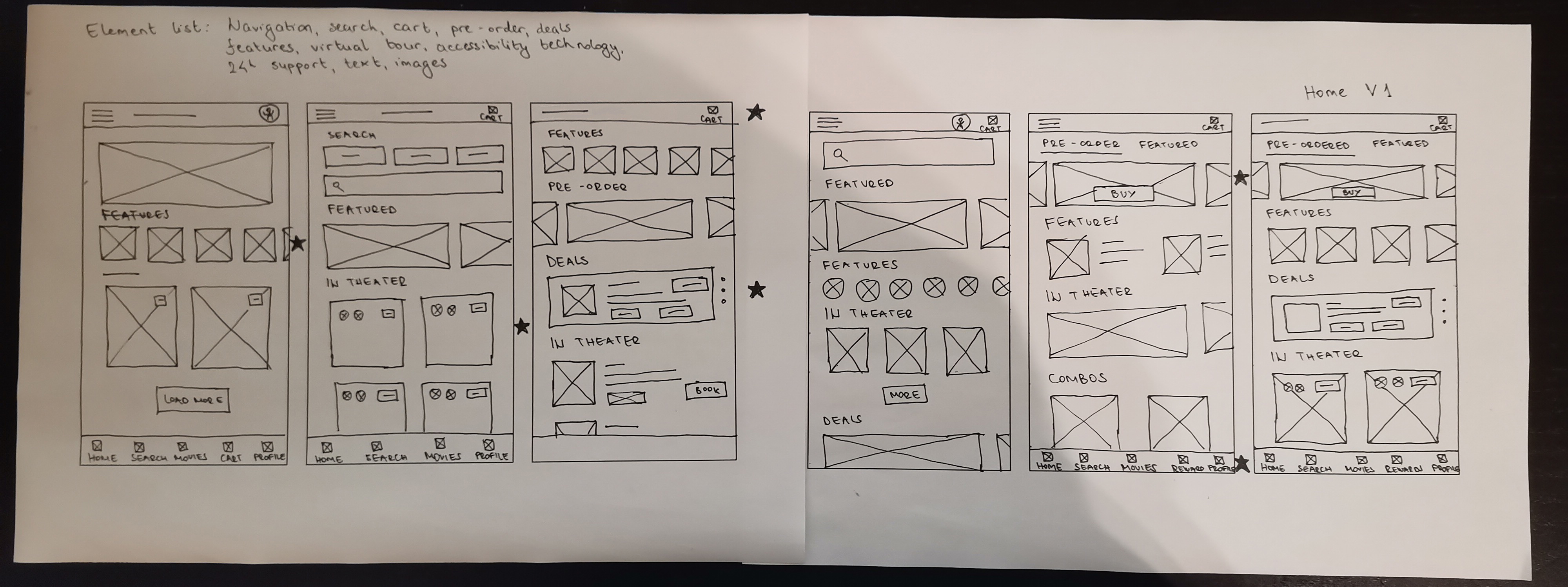
After the competitive audit, crazy 8, goal statement, etc. I start sketches and paper wireframes first for the Home page. I sketched 5 potential solutions and then I took from the sketched solutions the sections (star) that I thought would best fit into the final solution.
Peper wireframe
Digital Wireframe & Prototype
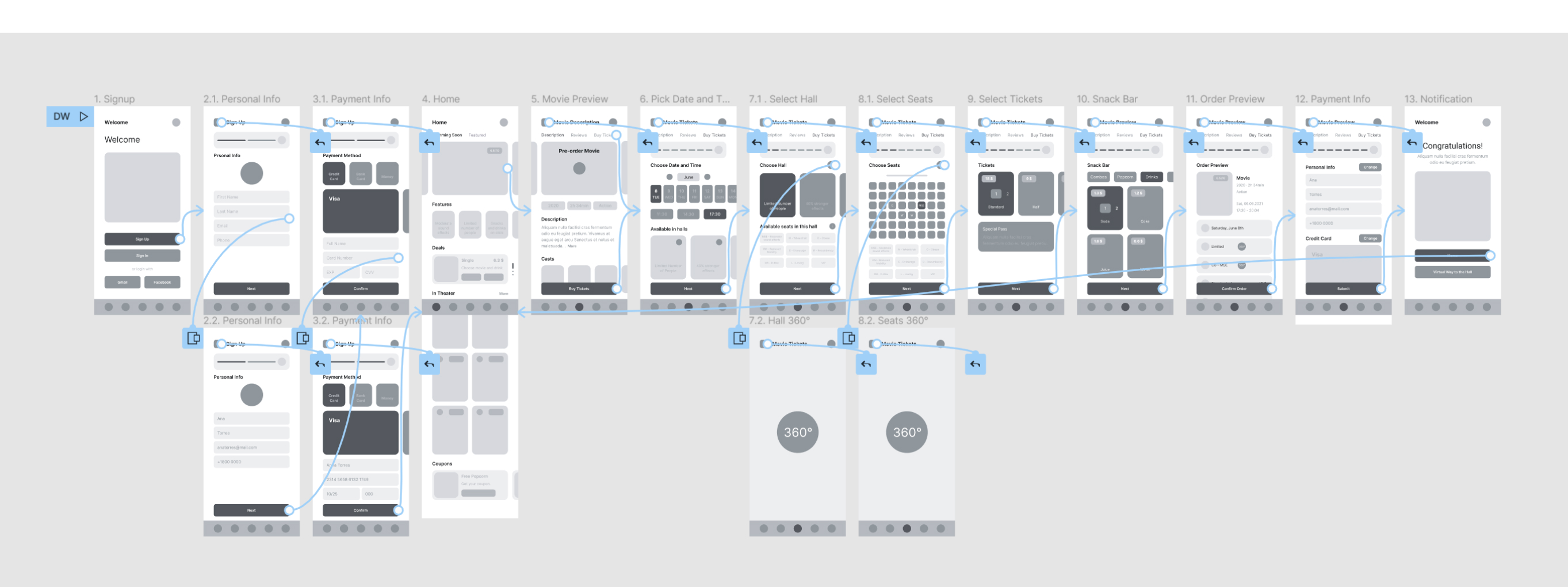
The next step is the digital wireframe. I transferred the idea to digital form, that is, I created a digital wireframe and a prototype. Considering that, study planning and prototype testing by participants began.
Research
I spent half the duration of this project interviewing people as well as doing some research on competitors. Here is a research study details:
Methodology
● Unmoderated usability study
● Location: United States and Europe, remote
● Date: Session will take place on June 4th
● Five participants (2 Male, 3 Female aged 16 to 75), each
completing the study on their own.
All participants were selected to make a purchase through the movie theater
sales app, independently.
Each participant complete questionnaire on their experience privately.
● Each session will last 60 minutes and will include an introduction, a short
questionnaire, and a list of tasks.
Basic Questions
● How many times have you visited a movie theater?
● How did you feel, what is your experience with going to the
movie theater?
● How do you decide which movie to watch?
● Which way do you prefer to buy tickets (e.g. through an app,
in a movie theater, etc.)?
● What is your experience with buying tickets?
● Whether the hall and the seat are important to you when buying
tickets?
User testing results
I conducted interviews and created empathy maps to understand the users I’m designing for and their needs. The specific group of users identified by the survey was adults who had unpleasant experiences with watching movies in movie theaters. This group of users confirmed the initial assumptions about the visitors of the movie theater, but the research also revealed that there are previous experiences that did not leave a positive impression and because of which a group of people avoid going to the movie theater. This mainly concerns the specific needs that visitors have, such as being bothered by strong sound effects, crowds, not understanding the movie in the language in which it is shown, etc. Other user problems were related to the problem of standing in line, lack of information, features, and options within the app.
From the study and prototype testing by participants, I analyzed and synthesized the results, identifying patterns, themes, and I was able to identify pain points and define the insights they are as follows:
P0
Clear way to pick a date and time
Users need a more intuitive way to pick date and time.
P1
Movie showtime
Users need information about movie showtimes.
P2
Detailed description of the hall and seats
Users need a more detailed description of the halls and seats.
Mockup
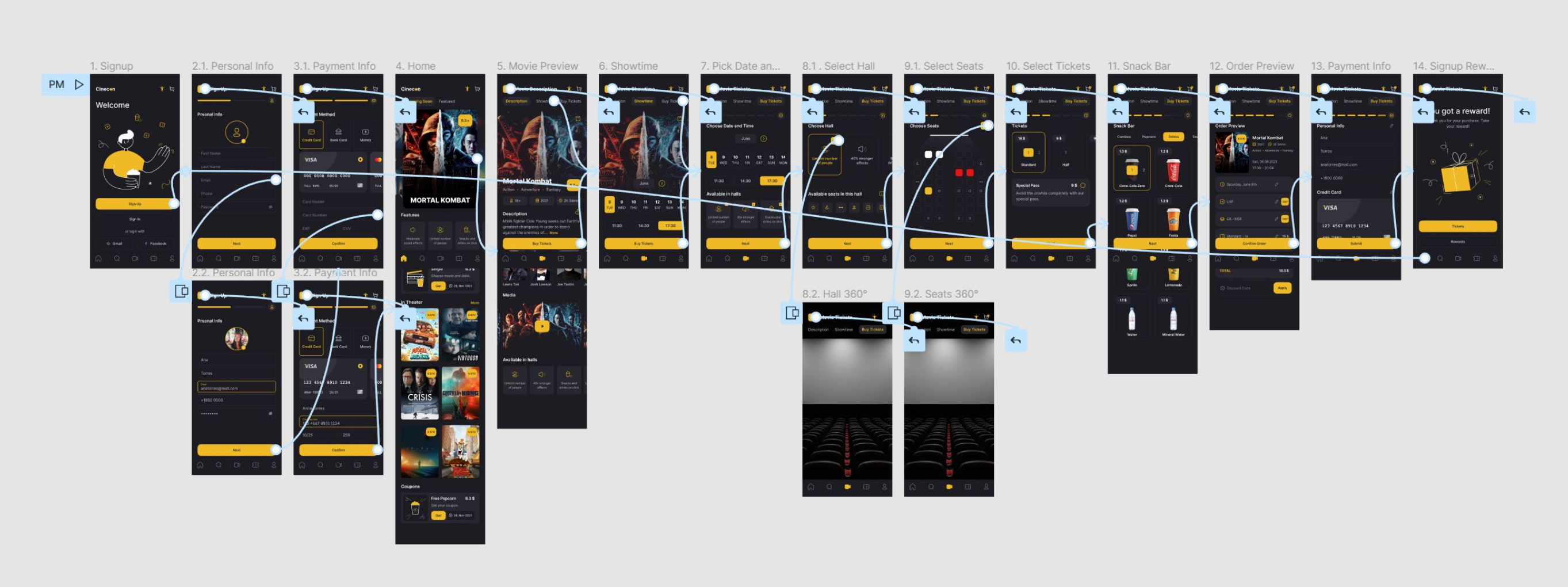
Based on the insight, wireframe is updated and finally, a high-fidelity design and mockup were created.
Next Steps
I would expand the app, create additional pages related to user profiles, rewards, discounts, and the similar. After that, prototype upgrades to enable users to try out all the features offered by the app and at the end one more round of usability study. As I mentioned in the introduction, I learned an incredible amount about UX design and especially about researching and putting users in the front and center.